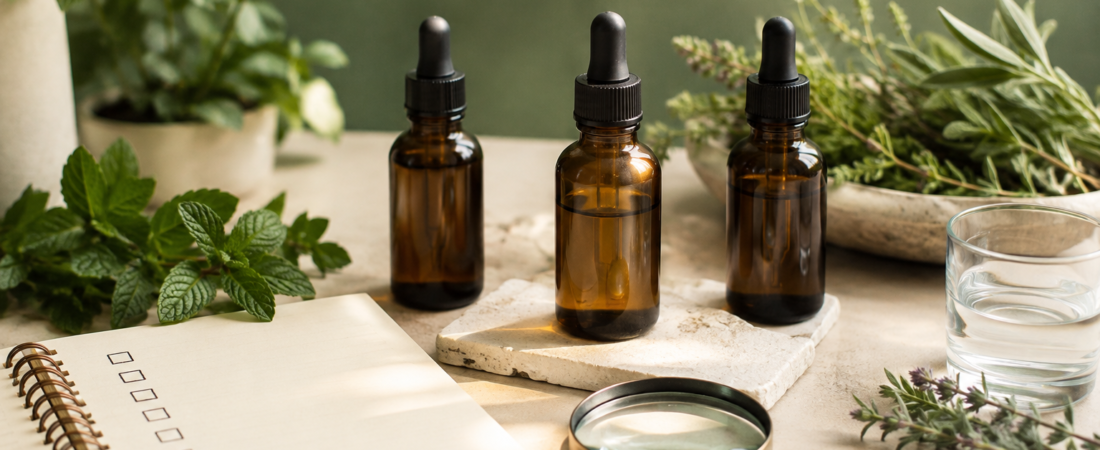
Choosing a botanical supplement should begin with clear questions—not dramatic promises. A thoughtful comparison looks at the label, serving size, ingredient identity, format, warnings, quality information, and how the product fits with your medicines and everyday routine.
This guide is for general education. It is not medical advice, and no supplement should be used to diagnose or treat a health condition.
1. Define what you are actually looking for
Start by separating a general wellness preference from a medical concern. If you have persistent swelling, pain, unexplained fatigue, digestive symptoms, or another ongoing issue, seek qualified medical care instead of selecting a supplement based on advertising.
For general wellness, decide what matters most: a simple format, a specific botanical, clear serving instructions, limited other ingredients, or a formula that is easy to use consistently.
2. Read the Supplement Facts panel before the front label
The front of a package is designed to communicate quickly. The Supplement Facts panel gives you the information needed for a more careful comparison: serving size, servings per container, dietary ingredients, amounts per serving, and proprietary blend information.
Compare products on a per-serving basis. A large number printed on the front may refer to a raw-herb equivalent, total blend weight, package quantity, or another measurement.
3. Look for botanical specificity
- Plant name: a botanical name can help distinguish similar common names.
- Plant part: root, leaf, flower, fruit, bark, or aerial parts are not automatically interchangeable.
- Form: powder, extract, oil, or juice describes how the ingredient appears in the formula.
- Extract ratio: this describes preparation and concentration; it is not a guarantee of a particular effect.
4. Understand individual amounts and proprietary blends
Individually listed ingredients show their amount per serving. A proprietary blend shows the total blend amount and names the ingredients, but generally does not state the amount of each component.
Neither approach automatically makes a product good or bad. The important point is to understand what the label does—and does not—allow you to compare.
5. Review “Other Ingredients”
Carriers, flavors, capsule materials, sweeteners, acids, and stabilizers can be important for dietary preferences or sensitivities. A short list is not always superior, and a longer list is not always a problem; the function and suitability of each ingredient matter.
6. Consider the format realistically
A liquid dropper may fit naturally beside a morning glass of water. Capsules may be easier for travel. Powders may require mixing, while gummies can add sweetness. Choose a format you can measure, store, and use according to its label.
Do not assume that liquid means instant absorption or that a larger serving means a better formula unless reliable evidence supports that conclusion.
7. Check warnings and possible interactions
The NIH Office of Dietary Supplements advises consumers to tell healthcare providers about all supplements and medicines they take. Botanicals can interact with medicines, affect laboratory tests, or be inappropriate before surgery and during pregnancy or nursing.
Use extra care when combining multiple products. Different formulas may contain the same herb or compound even when the front labels emphasize different purposes.
8. Evaluate quality language carefully
Terms such as “natural,” “premium,” and “clean” do not have one universal meaning that proves quality. More useful questions include:
- Does the company provide a complete label?
- Can it explain what its testing statements refer to?
- Are contact information and responsible-use warnings easy to find?
- Does it avoid disease-treatment claims and guaranteed outcomes?
- Does the packaging identify the responsible company?
9. Be cautious with reviews and before-and-after stories
Customer experiences can help you understand taste, packaging, and ease of use, but they cannot predict your personal response. Reviews should not replace label reading, professional advice, or reliable research.
A practical comparison worksheet
- Write down each product’s serving size and servings per container.
- List the ingredients with declared amounts.
- Circle ingredients included only in proprietary blends.
- Note plant parts, extract ratios, and other ingredients.
- Review warnings and possible overlaps with products you already use.
- Discuss remaining questions with a qualified professional.
Where BuzzLab fits
BuzzLab is a 2 mL liquid dietary supplement with eight individually listed botanical extracts and an additional proprietary botanical blend. We present it as an optional part of a broader wellness routine and encourage every customer to read the complete label.
See the BuzzLab formula in detail →
Trusted resources
- FDA: Questions and Answers on Dietary Supplements
- NIH: Dietary Supplements—What You Need to Know
- NIH Botanical Supplement Fact Sheets
- How to Read a Supplement Facts Label
* These statements have not been evaluated by the Food and Drug Administration. BuzzLab is not intended to diagnose, treat, cure, or prevent any disease.