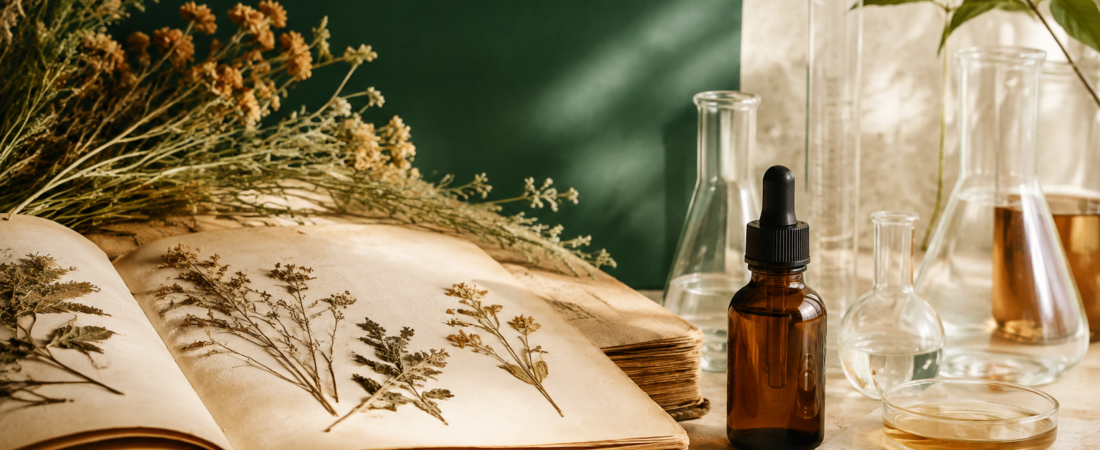
Modern botanical supplements sit at the meeting point of traditional plant knowledge, contemporary manufacturing, transparent labeling, and realistic expectations. A polished package or long ingredient list is not enough; thoughtful formulation also requires identity, consistency, appropriate quality controls, and responsible communication.
This article is educational and is not medical advice. Dietary supplements are not intended to diagnose, treat, cure, or prevent disease.
Tradition can inspire a formula—but it does not replace evidence
People have prepared roots, leaves, flowers, fruits, and bark for generations. That history can help formulators identify interesting plants and traditional patterns of use. However, historical use is not the same as proof that a modern extract will produce a specific health outcome.
A responsible brand distinguishes between botanical tradition, laboratory characterization, clinical evidence, and marketing language rather than blending them into one oversized promise.
Ingredient identity is the starting point
Modern labels can identify the common name, botanical name, plant part, extract form, and amount per serving. These details matter because a leaf, root, flower, or fruit from the same plant may contain different naturally occurring compounds.
When reviewing a formula, ask:
- Is the plant part stated?
- Is the ingredient a powder, juice, oil, or extract?
- Is an extraction ratio or raw-herb equivalent provided?
- Is the amount declared individually or inside a proprietary blend?
Good manufacturing practices are part of the story
FDA current good manufacturing practice requirements for dietary supplements address production controls, specifications, quality-control operations, packaging, labeling, and recordkeeping. These requirements help companies build consistent processes; they do not mean that the FDA has approved a supplement for effectiveness.
Consumers should be cautious when a brand uses general terms such as “lab tested” or “quality tested” without explaining what those words mean. Testing can refer to identity, microbiological quality, heavy metals, potency, or other specifications. The specific context matters.
Liquid, capsule, powder, and gummy formats
Modern supplements come in many forms. A liquid may be convenient for people who prefer a measured dropper. Capsules can be portable and familiar. Powders may be useful when a larger serving is needed. Gummies can be approachable but may include sweeteners and require careful storage.
No format is automatically best for everyone. The practical choice depends on the formula, label directions, storage, serving accuracy, preferences, and individual needs.
Transparency includes what a product does not promise
Trust is strengthened when a company communicates limits as clearly as benefits. Botanical supplements can be part of a wellness routine, but they should not replace prescribed medicine, professional diagnosis, or a varied diet.
Responsible communication avoids guaranteed results, extreme before-and-after language, and claims that normal discomfort always means the body is “toxic” or “blocked.”
The role of proprietary blends
A proprietary blend can protect a formulation while identifying its components and total weight. It does not reveal the amount of each component. That tradeoff should be understood plainly.
BuzzLab’s label lists eight botanical extracts individually and a separate 95 mg proprietary blend containing additional ingredients. We encourage customers to read both sections rather than treating “22-in-1” as a shortcut for judging quality.
What thoughtful formulation means to BuzzLab
- Clarity: explain serving size, ingredient structure, and product format in accessible language.
- Consistency: encourage customers to follow the label rather than improvising higher amounts.
- Context: present supplements as one optional part of everyday wellness.
- Restraint: avoid disease claims and guaranteed individual outcomes.
- Curiosity: continue learning from established regulatory and scientific resources.
Questions modern consumers can ask
- Can I identify the serving size and number of servings?
- Are ingredient forms and plant parts described clearly?
- Does the brand distinguish education from medical advice?
- Are warnings and other ingredients easy to find?
- Can I contact the company and locate an official product listing?
Explore more
- Our Formula
- Inside the BuzzLab 22-in-1 Botanical Blend
- FDA: Dietary Supplement Current Good Manufacturing Practice
- NIH: Botanical Dietary Supplements
* These statements have not been evaluated by the Food and Drug Administration. BuzzLab is not intended to diagnose, treat, cure, or prevent any disease.